
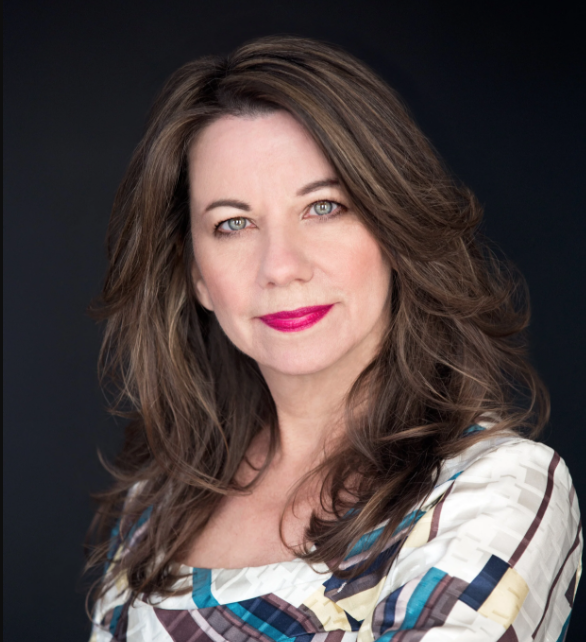
Terry Eder is the founder of Key Pianists concert series, celebrating its 10th anniversary in the 2025-26 season. On February 12, 2026 Eder performs a recital of Bartók alongside music by Beethoven, Schubert and Debussy at Weill Recital Hall at Carnegie Hall (tickets available here). We spoke with her about Key Pianists’ mission, the upcoming recital, being one of the only Americans studying in Hungary in the 1980s, and more.
What made you want to start the Key Pianists series? Why Carnegie Hall?
New Yorkers are extremely lucky to have the opportunity to hear the world’s most famous pianists from around the world with regularity. There are also concert series here in New York that specifically present opportunities to young professionals just starting their careers. I noticed that there were few opportunities for pianists who do not fall into one of those two categories. Certainly there are smaller, more informal venues where one can present or attend a concert. However, there are many wonderful pianists who deserve a more prominent platform. I felt that a series that presented significant and seldom-heard artists on the stage of Carnegie Hall would be welcome by those artists and by the pianophile audience found in NYC, who would otherwise not have a chance to hear them. Carnegie Hall is the pinnacle of achievement for any musician; the history, the acoustics, the beauty, the professionalism it represents. Weill Recital Hall has an intimacy that allows the audience to see and hear the artist up close, making a recital there a very special occasion.
What criteria do you look for when considering which performers to present?
First of all, I look for performers who match the reason I began the series. Carnegie Hall inspires a high level of engagement, and I seek an artist who will relish the opportunity by presenting an exceptional program. I think programming is extremely important and I encourage pianists who perform unusual repertoire or who have acquired experience in a particular idiom or with a particular composer. The qualities of sensitivity, beauty, intelligence, communicativeness, and singularity are all important. Excellence is the real determining factor.
You’re a pianist yourself. What made you choose the piano?
I would say that the piano chose me. I grew up with 3 older sisters who were studying music, and my father who played jazz standards and ragtime every night after his work day as a dentist. At 4, my parents thought I was too young to study. After one of my sisters’ piano lessons ended, I would simply repeat the lesson by ear and show where the mistakes had been made. My parents learned I had perfect pitch as well, and allowed me lessons from then on. I never thought there would be a day when I stopped playing the piano.
Tell us about the repertoire you have planned for your recital in February 2026.
I wanted to include Bartók in this program because he is a favorite composer of mine, and also because people do not play Bartók very often despite the genius, uniqueness and beauty of his works. Two of the pieces I am programming, the Sonatine and the Two Romanian Dances, Op. 8/a, I have never heard performed by anyone else in the U.S. The Six Romanian Dances, which I am also playing, is heard and played quite often, also in a version for violin and piano. I also nearly always program Beethoven and will be playing the Sonata Op. 28. Schubert and Debussy round out the program with four of the Debussy Preludes, and a Schubert Impromptu and set of waltzes. There is a loose thread running through the program of an earthy, folk-like undercurrent in all of the works.
You’re playing Bartók, one of your specialties, and you studied in Budapest. How does that experience enrich your interpretation of this music?
Living in the 1980s behind the Iron Curtain was an affecting experience. I was young and impressionable and had never been outside the U.S. other than for a 15th birthday dinner in Windsor, Ontario, across the bridge from my hometown Detroit. It was the days of the cold war, when Americans simply did not go to Eastern Europe. There were a few other American grant winners in Hungary that year, and we were the only Americans in the entire country. The man on the street had never heard American English or met an American. I felt so foreign. These days it seems hard to fathom.
My mother was born in Romania so ancestry or genes may be a reason for my affinity with Eastern European music. But memories of my year in Hungary are incredibly vivid and no doubt have infiltrated my being. The pervasiveness and pride in musical heritage was overwhelming for someone coming from a culture where music was not considered a desirable profession. I became captivated with the uniqueness of the Hungarian language and sensibility, the rustic scenery outside the capital, the beautiful old architecture, the delicious food, the Parliament still full of bullet holes from WWII, the Turkish baths, the feeling of being so foreign, so out of place. I was immersed in all things Hungarian 24 hours a day, without English speakers around, without any westerners around, with the perfect opportunity to become part of that existence. I came away from it with what feels like an intense understanding of the Hungarian character.