
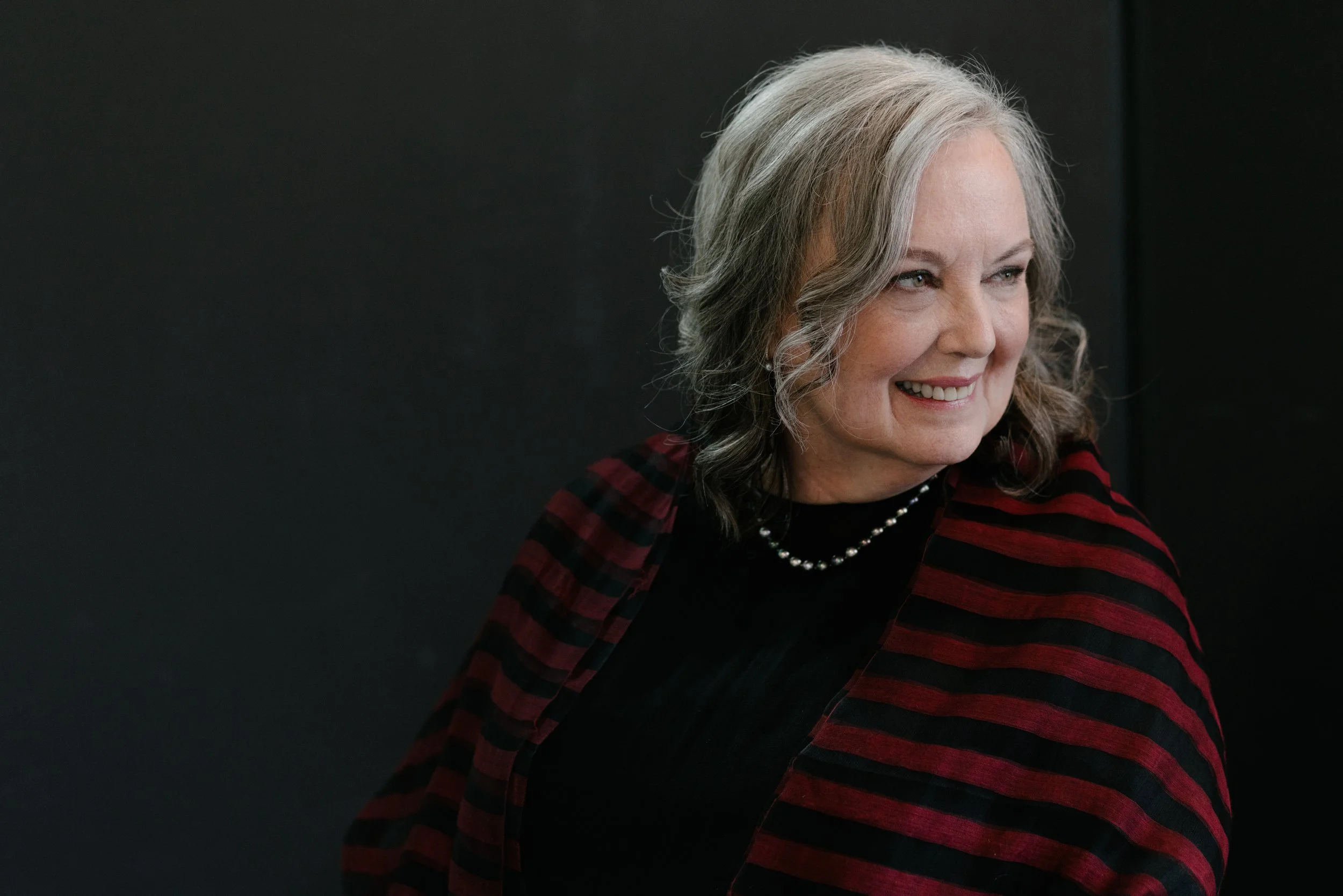
Hymn tunes are the inspiration for a new recording by the pianist Eliza Garth. "By the River" was released on Centaur Records on February 6, 2026. The new album features works written for Garth by David Froom, Scott Wheeler and Sheree Clement, plus Brahms' Six Choral Preludes and Spiritual Fantasy No. 4 by Frederick Tillis. We spoke to her about the new album, spirituality, her new film, community building, and much more.
Your new album, “By the River,” is inspired by hymn tunes. What sparked that idea?
I think that great hymn tunes – on their own, apart from the texts they accompany – are musical treasures. What makes a hymn tune survive over centuries is its singability and the way it lingers in the mind, and a great hymn tune can linger there, whether or not the listener is religious and whether or not any words are sung to it. Think about Appalachian Spring and the beautiful setting of the Shaker hymn Simple Gifts that Aaron Copland incorporated into it. Simple Gifts was not from Copland’s religious or cultural background – he was an urbane, non-believing Jewish man born in Brooklyn – but it’s clear that he was captivated by that tune. Simple Gifts is a true jewel of American folk art, and so are the tunes that are featured in several of the works on By the River.
In addition to the contemporary works on the album, the collection is anchored by Six Chorale Preludes by Brahms, transcribed for piano by Busoni. Tell us how this figures into the album’s program.
It’s easy to forget how recently Brahms’ Chorale Preludes were written. Although Brahms was a 19th century composer, these Preludes were his final work, completed in 1896 with the 20th century on the near horizon. Brahms was grieving the death of Clara Schumann, to whom the Preludes are dedicated, and contemplating his own illness and pending demise. The rich and singular harmonies and voicings reveal a master composer leaving earlier idioms behind.
It was Busoni who brought these works to the concert hall and into the 20th century repertoire, with his transcriptions of six of them in 1902. Born in the 19th century but ultimately a figure of the 20th, Busoni was already a mature artist at the time Brahms was composing the Chorale Preludes. To me, these works seemed a natural choice to include in the album, as they are simultaneously a precursor of music to come and part of the tradition from which the later works in the collection flow.
In addition to this album featuring piano works that grew out of hymn tunes, you also recently created a documentary film about slavery and segregation in the South, Shall We Gather. Tell us, briefly, about the film. Do these two projects reflect a sense of spirituality in your own approach to the arts?
I think of music itself as a kind of spiritual practice, and the performance space as a sanctuary. Music’s power can move people in ways that words can’t, and can touch them more deeply, in a realm beyond words. It can awaken kinship among listeners of divergent backgrounds, beliefs, and outlooks.
The film Shall We Gather was actually inspired by a work of music: Frederick Tillis’ Spiritual Fantasy #4 for piano solo, which is included in the album By the River. I’ve had a longtime creative relationship with the congregation of a small, historic church in rural Southern Maryland, where I taught in a liberal arts college for a number of years. Although I’m not a trained church musician, they hired me to advise them about ways to bring new energy and direction to their worship music – my love for discovering new music informed that work. Also, we worked together for six seasons to create a successful and innovative concert series called Music from Poplar Hill.
The church was founded in the 1600s, during the era of slavery. It’s Episcopalian, which means that it was built as a church for the landowners, and therefore slaveholders. The current congregation wants to come to terms with that difficult history. The film came to mind during a performance I gave in that church of the Tillis work. As I played it, I was struck by the significance of that music being performed in that space, a space built by the hands of enslaved people. I started thinking about a film that would weave together storytelling, music, and documentary elements to invite people to consider that history and how its ripple effects continue to play out today. Several conversations with the Rector followed, and Shall We Gather grew from there. Those involved in the production hope that the film will inspire reflection and invite dialog among those who see it, especially young people. So I would say that, more than a sense of spirituality, it was an interest in supporting social justice and reconciliation through the arts that motivated me to embark on the Shall We Gather project.
You have been active as a performer in both New York City and in Southern Maryland over the past few decades. How has community in each of these places helped shape your career?
During my final semester at The Juilliard School, I had the great fortune to find work in the new music community in New York City. I had always had teachers who believed that in order to be living fully as an artist, it was essential for a musician to engage with their composer peers and contemporaries. That outlook was hardwired in me from an early age, and I had exposure to “modern” music all throughout my training; some of my favorite works in the entire piano repertoire were composed in the modern era. So as a young professional, when I started getting calls to perform new works, I quickly developed a passion for bringing new works to life through their first performances.
I also found myself working with colleagues who shared that passion, and I found a spirit of welcome and collaboration in that community. Later, when I was offered the opportunity to teach at a liberal arts college in Southern Maryland that had a strong music program, community-building became a big part of what I tried to encourage in my students. We organized joint concerts with the other piano studio at the college – a program in which we all took turns performing the complete Bach Inventions and Sinfonias was one – and I co-founded the Piano Festival by the River, a yearly summer retreat where pianists and piano students could meet, re-charge, support each other, learn about a wide range of repertoire, and offer performances to the public.
After many years dividing my time between Maryland and New York, I have now returned to fulltime living in the New York City area, which has always been “home” for me.