
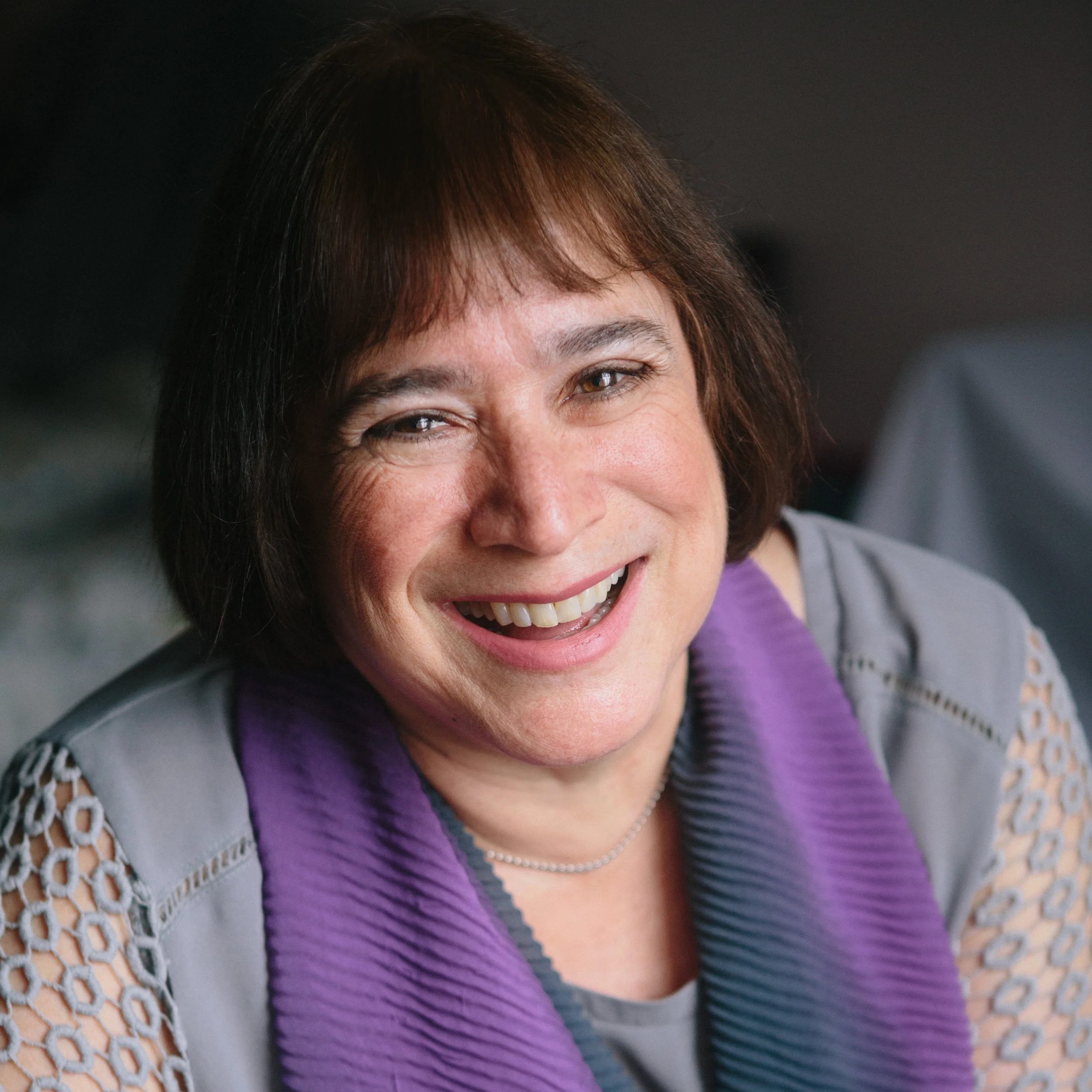
Markovina

Insider Interview with pianist Ana-Marija Markovina (Fanny Mendelssohn edition!)

Following her critically-acclaimed recording projects of the entire solo piano works of Felix Mendelssohn, CPE Bach, and others, Hänssler Classic has released the first volume of Ana-Marija Markovina's "Fanny Mendelssohn Hensel: Complete Solo Piano Works" (HC2307). The four-disc set contains 78 tracks, half of which have never been recorded before.

We spoke with the pianist about the new album, recording complete cycles, misconceptions about Fanny Mendelssohn, and so much more.

You’ve recorded several complete sets of composers works. What insight do you gain from doing a complete set, opposed to a survey or sampling of someone’s catalogue throughout their life?

It was my quest for understanding that led me, at some point, to start exploring the composers behind the music. It was no longer enough for me simply to play the music; I wanted to know who had brought this music into the world. In a strange way, this developed into a friendship with the creators who have given us this music. And it was an exciting journey. So, as I immersed myself in the composers’ lives and the sources available on the subject, I came to know their entire body of work – from childhood right through to their final years. And so it was only a logical step to record their entire body of work as well.

The first complete collection was the recording of Hugo Wolf’s piano works. It was incredibly fascinating, even though he hadn’t left behind much music for the piano. And so I continued my work in this vein. Luisa Adolpha le Beau, Anton Urspruch, Anton Bruckner… they weren’t huge projects. But the complete recording of CPE Bach’s piano works was certainly a real challenge. I loved his work, immersing myself in his world, his era, his life. I worked as if in a fever and recorded 26 CDs in just 13 months. The next project was then the vast oeuvre of Felix Mendelssohn Bartholdy. And since I was already ‘at home’ with the Mendelssohn family, I went on to explore Fanny’s life.

Why did you choose Fanny Mendelssohn for this latest iteration of the “complete solo piano works” recordings?

Working on Fanny’s piano works was a logical next step, as I was already quite ‘close’ to the Mendelssohn family through my work on Felix. Fanny was always there in a way, and the more I got to know her, the more intriguing and fascinating I found her. She is a shining light.

I’m curious about logistics. How much research went into this project? What was already available in terms of scores? How did you catalog all of this, and make sure it was a fully complete set, in chronological order no less?

We owe the first step in systematizing Fanny’s work to Renate Hellwig-Unruh. She put everything in the right order.

And then HenselPushersranscribed and published many unpublished scores. A magnificent piece of work! We found what was missing in the Berlin State Library. But that wasn’t much. Otherwise, Furore-Verlag has already published a large number of her piano works – very well, in my opinion – and, of course, it is also well worth studying the source material, such as letters and biographies, insofar as they are available.

Tell us about the relationship that Fanny and her more famous sibling Felix had. Do you think this relationship manifested itself in one or the other’s music?

Her relationship with her brother is a fascinating subject. Of course, it is constantly evident in their music; the two were, after all, connected in an almost cosmic way. Fanny was a good three years older than Felix and thus ahead of him in every respect. She, too, was mature for her age – an old soul, one might say. She adored her little brother, and he looked up to her. I am convinced that his artistic development was accelerated and nurtured by his close bond with Fanny. Later on, he was able to ‘spread his wings’ in the wider world, something she was denied. She remained within her own circles in Berlin, where she nevertheless found her niche as a musician and enjoyed the highest acclaim. I think the siblings influenced one another, whilst respecting each other’s individual artistic personalities and enriching one another immeasurably.

What do you want people to know about Fanny? Are there misconceptions you’d like to set straight, or some significant facts that might be unknown to the casual classical music fan?

I hope that Fanny will be recognized as the great artist she was, with a musical style that was entirely her own. I hope that people will stop saying her music sounds a bit like Liszt’s, or like Felix’s, but that they’ll take Fanny as the benchmark and say: ‘Oh, that sounds just like Fanny Hensel.’ Fanny was a great soul, a wonderful person and completely independent. Fanny was Fanny, full stop. Her music is authentic, personal, passionate and direct. She was free; she was able to practice a lot, read, reflect and develop artistically without having to keep an eye on the market or worry about career progression or finances. This is an advantage for art that should not be underestimated.

What I would like to set the record straight on is the image of the oppressed woman. Yes, it is true that she had to wait longer than her brother to publish her works. But she did eventually publish them! And there can be no question of oppression in a household where one was brought up in the spirit of the great Enlightenment thinker Moses Mendelssohn. She received the best education available in her day. She associated with the greatest thinkers of her time, and with the great artists of her time, whom she invited to her home for concerts. She was a pianist, composer, manager and conductor; she was highly regarded and enjoyed the utmost recognition. She was taken seriously. She was an icon and highly influential. She simply started publishing a little late – that’s all. The family were also against it because they wanted to protect her, not hold her back. I believe that reducing her to the ‘invisible sister’ of her famous brother creates a false impression of Fanny. She was a giant of a woman.

Fanny Mendelssohn's complete solo piano works

Pianist Ana-Marija Markovina: "Fanny Mendelssohn Hensel: Complete Solo Piano Works Vol. 1"

The first of two volumes on Hänssler Classic is released May 15, 2026 digitally worldwide (physical CDs available in North America on June 19, 2026)

Collection includes dozens of works recorded for the first time

"one of the most outstanding artists of her generation." – Paul Badura-Skoda

Following her critically-acclaimed recording projects of the entire solo piano works of Felix Mendelssohn, CPE Bach, and others, Hänssler Classic releases the first volume of Markovina's "Fanny Mendelssohn Hensel: Complete Solo Piano Works" (HC2307). The title is available digitally worldwide beginning on May 15, 2026 (physical CDs available in North America June 19, 2026). The four-disc set contains 78 tracks, half of which have never been recorded before.

"Fanny’s universe moves me time and again to a state of reverential awe. Her personal biography contains quite a considerable portion of tragedy precisely because it is not a story of legendary artistic potential but an example of the strictures of the era in which she lived," says Markovina.

Although she was not permitted to either perform in public or publish her works, Mendelssohn Hensel composed more than 250 works, 160 or so for piano. Markovina continues: "These works are a munificent gift that has opened up an entire new universe for me. To have time without any financial worries allowed Fanny a kind of artistic continuity that is rarely found in an artist’s biography. When a composer is not afraid of disappointing their audience and not tempted to water down their ideas in the hope of acclaim, what they compose becomes a true experiment which may lead to who knows where."

Volume One of this collection, presented in chronological order, reveals much of the composer's character: her development from a young girl with her very first pieces full of poetry and at the same time radiating her determination and strength which were later to be the hallmarks of her later compositions.

Contact ClassicalCommunications@gmail.com to request a physical CD or digital copy of "Fanny Mendelssohn Hensel: Complete Piano Works Vol. 1" by pianist Ana-Marija Markovina.

Insider Interview with Pianist Ana-Marija Markovina

On January 7, 2022, Pianist Ana-Marija Markovina released a massive and comprehensive set of solo piano works by Felix Mendelssohn (Hänssler Classic, HC18043), twelve discs in all. In this insider interview, we spoke to the pianist about embarking on such a task, why the composer is underrated, her love for literature, and so much more!

What inspired you to record the complete solo works for Mendelssohn?  

Mendelssohn is, in my opinion, one of the most underrated composers ever. Some pieces, such as the Variations Sérieuses, have become quite famous and are present on concert stages and in musical institutions. The Songs without Words - Lieder ohne Worte - also enjoy great popularity. But otherwise? One knows hardly anything about Mendelssohn's vast oeuvre. I was interested in the reason for this lack of presence in people's consciousness. One of the reasons is certainly to be found in the dark times when Jewish music was forbidden or at least frowned upon. And it wasn't just the 12 Nazi years here. There were always anti-Semitic attitudes, just think of Wagner. Wagner despised Mendelssohn because he was Jewish. He wrote nasty things about him, what was terrible.  This attitude is certainly one reason why Mendelssohn could not occupy the same space in the general consciousness as, say, Chopin or Brahms. I find that tragic and want to change it. 

And the reason why it is a complete recording is that I am trying to make only complete recordings. I'm always interested in wholeness in every sense. I am more fascinated by becoming than by being. The fascination for me is the path of life, the development, the growth. And I experience that only if I identify completely with the work, get to know everything, explore every corner of a composer’s life and work, and don't "cherry-pick".  

What does your box set bring to the Mendelssohn canon that was previously missing? 

First and foremost, I would like to mention the sketches, the fragments. They give us an important new insight into Mendelssohn's working methods. It is more exciting for me to see what he discarded than what he published. And, what is also a novelty: I have recorded the different versions whenever I could find them. From this it is evident that Mendelssohn very consciously edited his works when he was to publish them. The thing he lacked most in life was: Time. He had no time. He worked incredibly hard, was a successful music manager, a family man, and a helpful friend. This led to the fact that he wrote down, for example, a small song without words quite inspired but quickly, and he did not write it down exactly. When it came to publication, however, he wanted to go back to work, because he was seldom satisfied with his results. And this revising was particularly interesting for me. One can then best sense how he thought and what musical conception he had. 

In addition, there are some works that have never appeared in the context of a complete recording such as the solo version of the Capriccio MWV U 87, some songs newly added by Larry Todd and smaller works. 

If you could single out just one or two, what solo piano works do you wish the world knew about? In other words, are there any pieces that you wish were just as well-known as the composer’s “greatest hits”? 

Yes, of course. First of all, there are the early sonatas. I appreciate them all, but especially the Sonata in C minor. The beginning of the first movement is strongly reminiscent of Beethoven's "Pathetique" and is very impressive. But also the F minor Sonata MWV U 23 - inconceivable that an 11 year old child wrote this! We think first of Mozart when it comes to the subject of child prodigies, but Mendelssohn is at least as great a phenomenon. I am also particularly enthusiastic about some less know later piece, the etudes e.g,, especially B flat minor MWV U 117 and A minor MWV U 142. 

You’ve made a name for yourself recording the complete works for piano of a few composers now. With each of these sets, how do you begin the process of such a massive undertaking? 

That's quite simple: I read. I read as much literature as I can. That helps me to immerse myself in the composer's world. Into his or her everyday life, their relationships with other people. I try to understand how he or she grew up, what the upbringing was like, whether the parents were loving, nurturing and understanding or punitive and destructive. In Mendelssohn's case, the family history is particularly exciting because of the great Moses Mendelssohn, who shaped the family for generations, indeed who shaped his entire era and humanity to this day as a humanist philosopher.  

Furthermore here is the fact that the family was very rich. Felix and Fanny never had financial worries, that was not an issue at all. On the contrary: they rather tried to hide their wealth and therefore worked all the more diligently. I internalise all this before I start practicing. The atmosphere, the spirit of the works is then much closer and easier for me to grasp. 

What insights about Mendelssohn did you gain in the process of recording the album? 

His life itself. The essence of his being! He was a very generous man - one experiences this above all in the infinite wealth of ideas of his melodies. And in what he did not publish. He did not have to carry out every idea, that is also a sign of a gigantic talent, a sign of his modesty, his seriousness and just his generosity. I can talk about that now with greater certainty, with a certain clarity. And I could not do that before. Before, before the recording, I knew his music, but now it flows through my veins, so to speak. 

What do you hope listeners take away from the album?  

First of all, many hours of beautiful music. And then the realization that even the greatest talent in the cosmos must work hard, because otherwise the talent is worthless. Mendelssohn, with all the privileges in his life, wealth and talent, was hardworking and modest. He was a wonderful character, everyone loved him. I think, I hope, you can hear that. And that's a beautiful contribution to a happy life, isn't it? 

Out now: Mendelssohn's complete works for solo piano

Ana-Marija Markovina releases Mendelssohn-Bartholdy: Complete Works for Piano Solo

12 CD box set includes sonatas, etudes, Songs Without Words, preludes, fugues, character pieces, capriccios, fantasies, theme and variations, and more

Released January 7, 2022 on Hänssler Classic

The pianist Ana-Marija Markovina has made a career out of studying and recording the complete catalogue of piano music by the composers whose work intrigues her. “A composer’s oeuvre can only be fully understood in the context of his lifetime achievement,” she wrote in the liner notes of the album. “When I engage with a composer, I need to know everything about him.” Previous sets include Markovina's recordings of complete piano works by CPE Bach, Hugo Wolf, Anton Bruckner, and Luise A. Le Beau.


On January 7, 2022, Markovina releases a massive and comprehensive set of solo piano works by Felix Mendelssohn (Hänssler Classic, HC18043), twelve discs in all. “Mendelssohn was a cosmos that opened before me. There were worlds waiting to be discovered,” she wrote.

Ana-Marija Markovina's set of recordings of Mendelssohn’s piano works runs in chronological order of composition. This approach reveals new aspects of his genius, wrote Ms. Markovina. “It shows that he was borne along in a constant flow of inspiration and composition, and would be working almost simultaneously at several different works. It also makes it possible to follow his artistic development as if in a picture gallery. We can see little Felix sitting over his fugues on his way to [writing] the oratorio.”

Ms. Markovina's box set includes sonatas, etudes, Songs Without Words, preludes, fugues, character pieces, capriccios, fantasies, theme and variations, and more. Her comprehensive survey of Mendelssohn’s piano music also includes sketches and fragments. “I have always felt the urge to see what was going on in the workshop,” she wrote. “I’ve always wanted to know how we come to be what we are, what we have become and what remains of us in the end."

Contact ClassicalCommunications@gmail.com to request a physical CD or digital copy of this recording.


Mendelssohn-Bartholdy: The Complete Works for Piano Solo

Ana-Marija Markovina, piano

Featuring the complete sonatas, etudes, solo Lieder, preludes, fugues, character pieces, capriccios, fantasies, theme and variations, and more

Hänssler Classic (#HC18043)

Release date: January 7, 2022

(UPC: 8 81488 18043 5)

Read the liner notes

Download Cover Art

View Ana-Marija Markovina's Digital Press Kit

Request a copy of this CD

The Croatian-born pianist Ana Marija-Markovina, called “one of the most significant artists of her generation” by legendary pianist Paul Badura-Skoda, is a critically acclaimed musician who brings scores to life with great passion and skill.

In addition to her 2022 release on Hänssler Classics of the complete solo piano works by Felix Mendelssohn, she has become known for her recordings of the complete catalogues of selected composers, including that of Hugo Wolf, Anton Bruckner, Anton Ursbruch and the 26-CD set of Carl Philipp Emanuel Bach's keyboard music, which received the German Record Critics’ Award in 2014.

Her extensive concert activities regularly take her to significant venues in her adopted home of Germany and around the world, performing recitals and concertos with an impressive list of acclaimed ensembles. She is a regular face on the music festival scene throughout Europe.

Ana-Marija Markovina is equally devoted to pedagogical work, and attracts a large number of participants to her international masterclasses. Another aspect of her work is exploring the psychology of composers and the soul of their works. She is in constant exchange with scientists in the field of creativity and brain research, culminating in the publication of her book “Glücks-Spiel” in 2019.